Viticulture
How Sweet Wine Is Made: Noble Rot, Icewine and More
How sweet wine is made, the WSET way: noble rot, icewine, dried grapes, fortification and sweet reserve, with Sauternes, Tokaji, Port and the exam angles.
Why Some Wines Stay Sweet
Every wine starts as sweet grape juice. During fermentation, yeast eats the sugar and turns it into alcohol and carbon dioxide. Let it run to the end and you get a dry wine. So the real question behind how sweet wine is made is simple: how do you end up with sugar still in the bottle?
WSET teaches the answers as a short, logical list. Once you see it, Sauternes, icewine, Tokaji, Port and Recioto stop being random names and become examples of a few clear techniques. This guide walks you through each method, its classic wines, and how to turn it into exam marks.
Sweet Wine in the WSET Syllabus
Sweet wines appear from Level 2 onwards. The current Level 2 specification (Issue 2.1, 2026) covers grapes with concentrated sugars (overripe or late-harvest, botrytised and frozen), the winery options of stopping fermentation or adding sweetness, and label terms such as Late Harvest, Noble Rot and Icewine/Eiswein. It also names Sauternes, Tokaj, the German Prädikat terms and Port. Level 2 is a 50-question multiple-choice exam in 60 minutes, with a pass mark of 55%.
At Level 3 (specification Issue 2, 2022), the list becomes more precise. Under vineyard management, “concentrating grape sugars” covers:
- Noble rot
- Drying grapes on the vine
- Drying grapes after picking
- Freezing grapes on the vine
Under winemaking, “sweet winemaking” covers interrupting the fermentation, adding a sweetening component and concentrating grape sugars. The theory exam has 50 multiple-choice questions and four short written answer questions in two hours, and you need 55% in each part, so sweet wines can come up in both. Sauternes or Barsac and Tokaji Aszú are essential tasting samples in the Level 3 course, with icewine, Eiswein and German Beerenauslese among the optional ones.
The Big Picture: Two Ways to Keep Sugar
Every sweet wine uses one (or sometimes two) of these approaches:
- Concentrate the sugar in the grapes so the juice is so sweet that fermentation can’t (or isn’t allowed to) consume it all.
- Manage the sugar in the winery, by stopping fermentation early or adding something sweet afterwards.
| Method | How it works | Classic examples |
|---|---|---|
| Noble rot | Fungus shrivels the berries and concentrates sugar and acid | Sauternes, Barsac, Tokaji Aszú, Beerenauslese, Trockenbeerenauslese |
| Drying on the vine | Picked late, berries lose water and shrivel | Late Harvest, Vendanges Tardives |
| Drying after picking | Grapes dried on racks or in the sun before pressing | Recioto della Valpolicella, sweet PX Sherry |
| Freezing on the vine | Water freezes, only sweet juice is pressed out | Canadian Icewine, German Eiswein |
| Interrupting fermentation | Yeast stopped by chilling and filtering, or by adding spirit | Asti, Port, Muscat de Beaumes-de-Venise |
| Adding sweetness | A sweet component blended into a dry wine | Sweet reserve, Medium and Cream Sherry |
Why does concentration help? The more sugar there is in the juice, the harder life becomes for yeast. Very sweet musts ferment slowly and often stop on their own, or are stopped by the winemaker, with lots of sugar left and modest alcohol. That is why many of the sweetest botrytis wines are surprisingly low in alcohol.
Concentrating Sugar in the Vineyard
Noble rot (Botrytis cinerea)
Noble rot is the star of the sweet wine world. It is the fungus Botrytis cinerea attacking healthy, ripe grapes under very specific conditions: humid, misty mornings that let the spores develop, followed by drier, warmer afternoons that stop the fungus from spreading out of control. The fungus pierces the skins, water evaporates, and the berries shrivel. Sugar and acidity both concentrate, and the fungus adds its own aromas, often described as honey, marmalade and dried apricot.
The catch: if the weather stays wet, the same fungus turns into grey rot, which ruins the grapes. Botrytis also spreads unevenly, so pickers often go through the vineyard several times, choosing only affected bunches or berries.
The classic examples to learn:
- Sauternes and Barsac (Bordeaux): mostly Sémillon, with Sauvignon Blanc and sometimes Muscadelle. Autumn mists rise from the small Ciron river. Our guide to Bordeaux Left Bank vs Right Bank shows where they sit.
- Tokaji Aszú (Hungary): based on Furmint and Hárslevelű. Botrytised aszú berries are picked one by one, then soaked in fermenting must or young wine to extract their sugar and flavour. Sweetness was traditionally shown in puttonyos; since the 2013 rule changes, the minimum Aszú is 5 puttonyos (at least 120 g/L of sugar) and 6 puttonyos means at least 150 g/L.
- Germany and Austria: Beerenauslese (BA) is typically made from botrytised berries, and Trockenbeerenauslese (TBA) from individually selected, shrivelled botrytised berries, usually Riesling in Germany.
- Alsace and the Loire: Sélection de Grains Nobles in Alsace, and Chenin Blanc wines such as Coteaux du Layon in the Loire.
Drying grapes on the vine
The simplest method: leave the grapes on the vine well after normal harvest. As autumn goes on, the berries lose water and start to shrivel, which concentrates the sugar. These wines are often labelled Late Harvest or, in Alsace, Vendanges Tardives. The risk is the weather: the longer the grapes hang, the more they are exposed to rain, rot and birds.
Drying grapes after picking
Here the grapes are picked first, then dried, so the winemaker controls the process instead of gambling on the weather. Two examples in the WSET syllabus:
- Recioto della Valpolicella (Veneto): made mainly from Corvina, dried on racks or mats in well-ventilated lofts for weeks or months before pressing. Recioto is sweet, while Amarone, made from the same kind of dried grapes, is fermented to dry or nearly dry. Same raw material, different decision in the winery.
- Pedro Ximénez (PX) Sherry: PX grapes are dried in the sun until they are raisin-like, then the must is fortified to stop fermentation. Our guide to Sherry styles covers this in detail.
Freezing grapes on the vine
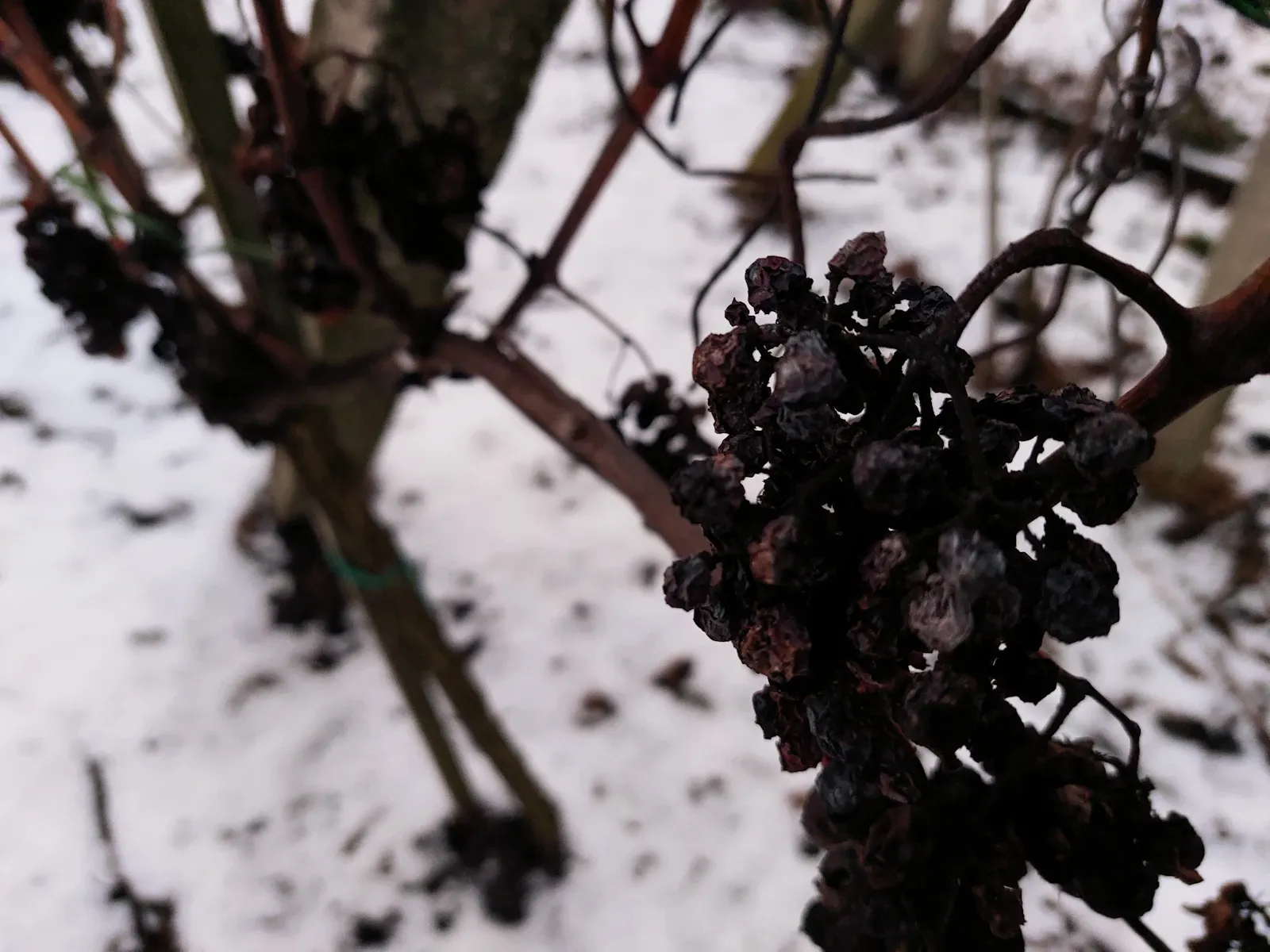
Icewine (Canada) and Eiswein (Germany, Austria) use winter instead of a fungus. The grapes are left on the vine until they freeze naturally, then picked and pressed while still frozen. Much of the water stays behind as ice, and only a small amount of very sweet, concentrated juice runs out.
- Canada: grapes must be harvested at -8°C or colder, and pressing must happen while they are still frozen. Most Canadian icewine is made from Vidal and Riesling. Both grapes appear in the Level 3 specification for Canada.
- Germany: Eiswein grapes must be picked at -7°C or colder, and the must has to reach the same minimum sugar level as a Beerenauslese.
Because healthy, clean grapes are the goal, icewine is usually pure and fruity with piercing acidity, rather than showing botrytis notes. A useful exam contrast: noble rot adds flavour; freezing mainly removes water.
💡 Tip: Learn the methods as “rot, dry, dry, freeze”: noble rot, drying on the vine, drying after picking, freezing on the vine. Then attach one classic wine to each (Sauternes, Vendanges Tardives, Recioto, icewine). In a short written answer, naming the method, explaining the mechanism and giving the resulting style is the pattern that earns marks.
Managing Sweetness in the Winery
Interrupting the fermentation
The winemaker can simply stop the yeast before it has eaten all the sugar. WSET highlights two ways:
- Chilling and filtering: used for Asti, the sweet, low-alcohol sparkling wine from Muscat. The fermentation is stopped by chilling and filtration, which removes the yeast while sugar remains.
- Fortification: adding grape spirit during fermentation. The extra alcohol kills the yeast, leaving natural grape sugar and a high final alcohol. This is how Port is made, and also the French vins doux naturels such as Muscat de Beaumes-de-Venise (where the process is called mutage) and Australia’s Rutherglen Muscat.
Remember the key difference from dry Sherry: Port is fortified to stop fermentation, while dry Sherry is fortified after fermentation has finished. That one sentence is worth a lot of marks at both Level 2 and Level 3.
Adding a sweetening component
The final route is to ferment a dry wine and then add something sweet. In Germany, the traditional option is sweet reserve (Süssreserve): unfermented grape juice kept aside and blended back in, often to balance a wine with high acidity. In Sherry, Pale Cream, Medium and Cream styles are made by blending dry Sherry with sweet wines or other grape-based sweeteners.
Why Acidity Matters So Much
A great sweet wine is never just sugary. What makes it refreshing rather than cloying is acidity. That’s why many of the most famous sweet wines come from grapes and places that keep high acidity: Riesling in Germany, Chenin Blanc in the Loire, Furmint in Tokaj, and Vidal and Riesling in cold Canadian winters. Our guide to how climate shapes wine style explains why cooler sites hold on to acidity.
In the tasting, this is your quality clue: a high-quality sweet wine shows a balance between sweetness and acidity and feels lively and long, not heavy. Sweetness also matters for food: the rule that the wine should be at least as sweet as the dish comes straight from our guide to food and wine pairing.
How to Use This in the Exam
In multiple-choice questions, expect matching: which method makes icewine, which grape dominates Sauternes, what makes Port sweet.
In written answers, always link cause and effect. Don’t just write “Sauternes is affected by noble rot”. Explain that misty mornings from the Ciron allow botrytis to develop, that drier afternoons keep it noble rather than grey, that shrivelling concentrates sugar and acidity, and that the result is a sweet, full-bodied wine with honeyed aromas. Our WSET Level 3 exam guide explains this style of answer.
In the tasting, describe the sweetness level precisely, then look for the clues: honey and marmalade suggest botrytis, pure, intense fruit with sharp acidity suggests frozen grapes, and warmth from high alcohol alongside sweetness points to a fortified wine.
🍷 Want to lock in every sweet wine method before exam day?
The VinoPrep app helps you master sweet wine production, regions and grapes with WSET-style mock exams, flashcards and interactive wine maps, and shows you which topics still need work.
Download VinoPrep on iOS | Download VinoPrep on Android
Key Takeaways
- Sweet wine keeps sugar either by concentrating it in the grapes or by managing it in the winery.
- The four vineyard methods are noble rot, drying on the vine, drying after picking and freezing on the vine.
- Noble rot needs misty mornings and drier afternoons; it concentrates sugar and acid and adds honeyed flavours (Sauternes, Tokaji Aszú, BA, TBA).
- Icewine and Eiswein are pressed from naturally frozen grapes (-8°C in Canada, -7°C in Germany).
- In the winery, fermentation can be interrupted (Asti by chilling and filtering, Port and fortified Muscats by adding spirit) or a sweetening component can be added.
- Acidity is what keeps great sweet wines balanced, and it’s your key quality clue in the tasting.
Frequently Asked Questions
What are the main ways to make a sweet wine?
WSET groups them into two families. In the vineyard, the winemaker concentrates the sugar in the grapes: noble rot, drying the grapes on the vine, drying them after picking, or letting them freeze on the vine. In the winery, the winemaker can interrupt the fermentation (by chilling and filtering, or by adding spirit) or add a sweetening component such as sweet reserve after a dry fermentation.
What is noble rot and why does it make wine sweet?
Noble rot is the fungus Botrytis cinerea when it attacks ripe grapes in the right conditions: humid, misty mornings followed by drier, warmer afternoons. It makes tiny holes in the skins, water evaporates and the berries shrivel, so sugar and acidity become more concentrated. It also adds its own flavours, often described as honey and marmalade. In constantly wet weather the same fungus becomes grey rot, which spoils the crop.
What is the difference between icewine and Eiswein?
They are the same idea in two countries. Grapes are left to freeze naturally on the vine, then picked and pressed while still frozen, so much of the water stays behind as ice and only a small amount of very sweet juice runs out. In Canada the grapes must be picked at -8°C or colder, mostly Vidal and Riesling. In Germany, Eiswein grapes must be picked at -7°C or colder and must reach the same minimum must weight as a Beerenauslese.
How is Port different from other sweet wines?
Port is sweet because fermentation is interrupted by adding grape spirit while plenty of sugar is still left in the must. The spirit kills the yeast, so the wine keeps natural grape sweetness and ends up with a high alcohol level. Fortified Muscats such as Muscat de Beaumes-de-Venise and Rutherglen Muscat use the same principle. Dry Sherry is different: it is fortified after fermentation has finished.
Do I need to know sweet wine production for WSET Level 2 or Level 3?
Yes, at both levels. The Level 2 specification covers overripe, botrytised and frozen grapes, plus stopping fermentation or adding sweetness, and names wines such as Sauternes, Tokaji and the German Prädikat terms. The Level 3 specification lists noble rot, drying grapes on the vine, drying grapes after picking, freezing grapes on the vine, interrupting fermentation and adding a sweetening component, and expects you to explain how each method shapes the style.
Put it into practice
Drill every grape and region from this guide.
VinoPrep's flashcards, interactive maps, and exam simulator are built to help you apply exactly what you've just learned.