Wine Tasting
Oak in Winemaking Explained: A WSET Guide
Oak in winemaking explained for WSET: barrel size, new vs old oak, toast levels, French vs American oak, oak alternatives, and how to spot oak when tasting.
Why Oak Matters So Much in the WSET Exams
Vanilla in a Rioja, toast in a white Burgundy, a cedar note in a Pauillac: a surprising amount of what you taste in classic wines comes from oak. It’s also one of the most common reasons students lose marks, because oak shows up everywhere in the syllabus: in winemaking, in regional styles, in the tasting notes and in the written answers.
This guide explains oak in winemaking the way WSET teaches it. You’ll see what oak actually does to a wine, why barrel size, age and toast matter, how French and American oak differ, what oak alternatives are, and how to recognize oak in the glass. By the end, you should be able to look at any winemaking choice involving oak and say what it will do to the style, which is exactly what the examiners want.
Where Oak Sits in the WSET Syllabus
Oak appears at both Level 2 and Level 3, with more detail at Level 3. Here’s what the current official specifications (Level 2 Issue 2.1, 2026, and Level 3 Issue 2, 2022) ask for:
| Level | What the specification lists | How it’s examined |
|---|---|---|
| 🌱 Level 2 | Vessel types (stainless steel, concrete, oak) and oak vessel types: small, large, new, old, level of toast, plus malolactic conversion and lees | The winemaking outcome is worth 4 of the 50 multiple-choice questions, and oak also comes up within the grape variety questions |
| 🌍 Level 3 | Oak vessels (species, production, age, size), inert vessels, lees contact and oak alternatives | The winemaking outcome is worth 8 of the 50 multiple-choice marks and is assessed within all four written questions |
Oak is also part of the Systematic Approach to Tasting (SAT) at both levels, as a cluster of secondary aromas. More on that below.
WSET updates its specifications from time to time, so always check the latest version with your course provider.
What Oak Actually Does to Wine
The single most useful idea in this whole topic is that oak has two separate effects:
- Flavor. Oak can add aromas such as vanilla, clove, coconut, toast, smoke and cedar, and a little extra tannin from the wood itself.
- Oxygen. A wooden barrel is not airtight. Tiny amounts of oxygen reach the wine over months or years. This slow exposure softens the texture, helps stabilize color in red wines, and encourages the development of tertiary aromas such as dried fruit, leather or nuts.
Why does this split matter? Because the winemaker can choose one effect without the other. A barrel that has been used many times gives oxygen but almost no flavor. Oak chips in a stainless steel tank give flavor but not the slow oxygen. Once you see oak this way, most exam questions on the topic become logic rather than memory.
The alternatives are inert vessels: stainless steel, concrete (when lined or sealed) and the bottle. These let little or no oxygen in and add no flavor, which is why they’re the go-to choice for fresh, fruity, aromatic styles such as Sauvignon Blanc or Riesling.
The Barrel Choices: Size, Age and Toast
When a winemaker decides to use oak, three practical choices control how much of an effect it has.
Barrel size
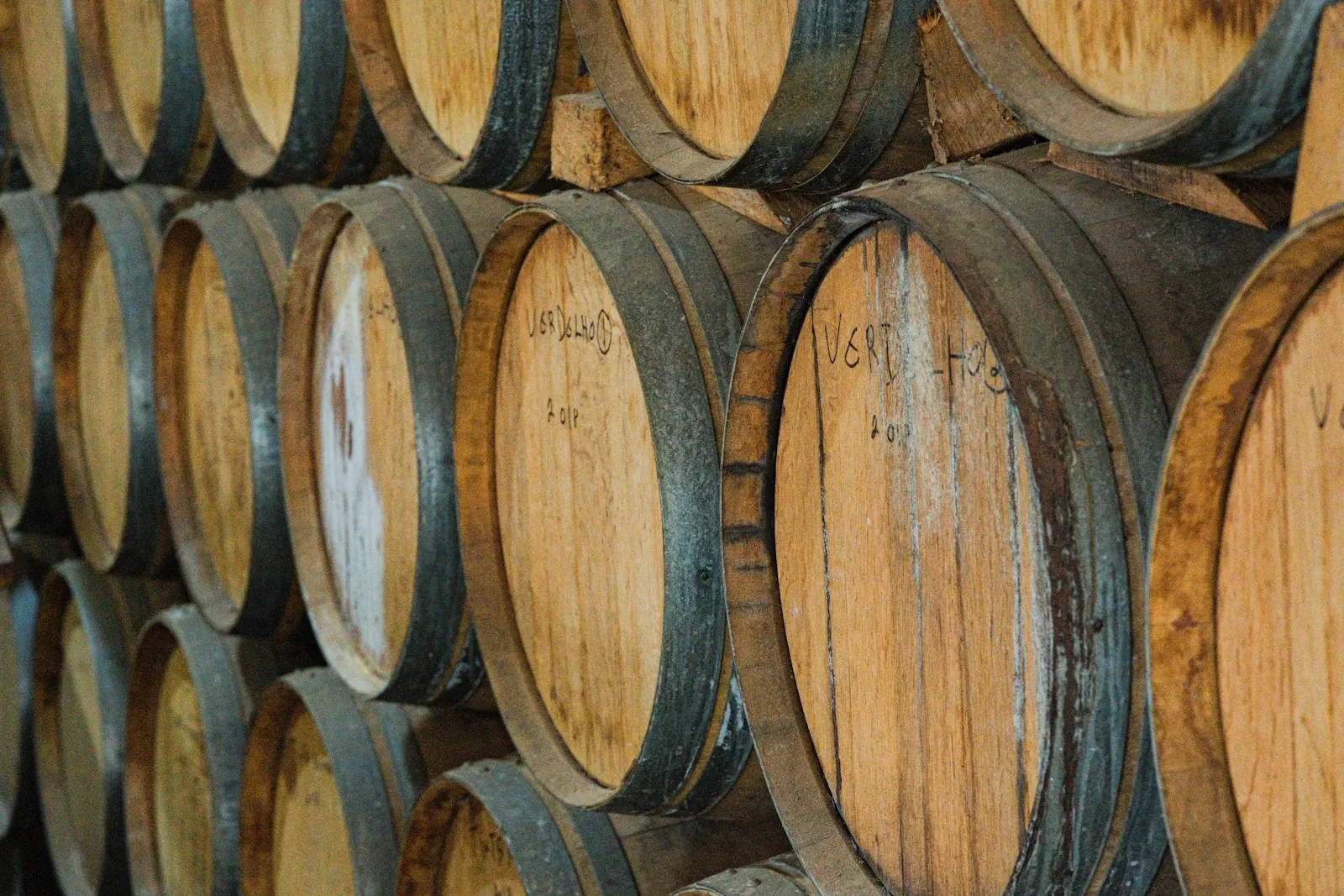
The smaller the barrel, the more wood surface each litre of wine touches, so smaller barrels give more oak influence. Larger vessels give a gentler effect.
| Vessel | Typical size | Effect on the wine |
|---|---|---|
| Bordeaux barrique | 225 litres | Strong oak influence, especially when new |
| Burgundy pièce | About 228 litres | Very similar to a barrique |
| Puncheon / demi-muid | About 500 / 600 litres | Moderate influence |
| Large casks (foudres, botti) | Often thousands of litres | Subtle: mainly gentle oxygen, little flavor |
A classic example is Barolo. Traditional producers aged their Nebbiolo in large old casks (botti), often made of Slavonian oak, for a gentle effect. “Modernists” used new French barriques to add oak flavor and soften the wine’s firm tannins. Today many producers sit somewhere in between.
New oak vs old oak
New oak gives the most flavor. Every time a barrel is refilled, it has less left to give. After roughly four or five uses, a barrel adds very little flavor and is usually described as old or neutral oak. It still lets oxygen in, though, which is why old barrels remain valuable.
This is why you’ll often read that a wine was aged in “30% new oak”: the winemaker blended wine from new and older barrels to control how oaky the final wine tastes.
Toast level
Barrels are bent into shape over a fire, and the inside is toasted. Coopers offer different levels, commonly light, medium, medium plus and heavy, and each pushes the flavor in a different direction:
- Lighter toast keeps more of the wood’s own character and tannin.
- Medium toast is where vanilla and sweet, caramel-like notes tend to be strongest.
- Heavy toast brings more smoke, coffee, chocolate and roasted notes.
French Oak vs American Oak
The Level 3 specification asks about oak species and how barrels are produced, and in practice that means comparing French and American oak.
| 🇫🇷 French oak | 🇺🇸 American oak | |
|---|---|---|
| Species | Mainly Quercus petraea (and Quercus robur) | Quercus alba (American white oak) |
| Typical flavor | Subtle, spicy (clove, cedar), toasty | Pronounced sweet vanilla and coconut, sometimes dill |
| Tannin | Fine-grained, polished | Generally a softer tannin contribution |
| Production | Staves must be split along the grain | Staves can be sawn, which wastes less wood |
| Cost | Typically roughly twice the price | Cheaper |
The coconut character of American oak comes from compounds called oak lactones, which it contains in higher amounts. Prices for barrels vary a lot by cooper, forest and toast, so don’t memorize figures: just remember that French oak is the more expensive option.
Rioja is the classic region for American oak: producers adopted it in the 19th century and it shaped the region’s signature vanilla and coconut style, although French oak is also widely used today. Rioja’s aging categories are a good exam link too. For red wines, Crianza needs at least 2 years of aging with at least 1 in oak, Reserva at least 3 years with at least 1 in oak, and Gran Reserva at least 5 years with at least 2 in oak, with the oak aging done in 225 litre barrels.
💡 Tip: Remember it as “France whispers, America shouts.” If a wine smells of loud vanilla and coconut, think American oak. If the oak is more discreet, spicy and integrated, think French. In a written answer, always add the effect on style, not just the name of the oak.
Fermenting in Oak vs Maturing in Oak
Oak can be used at two different stages, and examiners like to test the difference:
- Barrel fermentation is mostly used for white wines, classically Chardonnay. Fermenting in barrel, then leaving the wine on its lees (dead yeast cells), is widely taught as giving more integrated oak flavors, while the lees add body and bready, yeasty complexity. Stirring the lees (bâtonnage) increases this effect.
- Barrel maturation happens after fermentation and is used for both reds and whites. It’s where the oxygen effect really matters, especially for full-bodied reds that benefit from softer tannins and stable color.
Don’t confuse oak with malolactic conversion (MLC). MLC turns sharp malic acid into softer lactic acid and can create buttery aromas. It often happens in barrel, which is why students mix the two up, but the butter comes from MLC, not from the wood. Our guide to the most common WSET Level 3 mistakes lists this confusion as a classic trap.
Oak Alternatives: Chips and Staves
Barrels are expensive and take up space. For inexpensive wines, winemakers can instead add oak chips or oak staves (planks) to wine in a tank, usually stainless steel.
- ✅ Pros: much cheaper and faster, and they still give oak flavor.
- ❌ Cons: on their own, they don’t give the slow oxygen exposure of a barrel, so the texture and tertiary development are different.
In the EU, oak pieces have been a permitted practice since 2006, with rules on the size of the pieces, and wines made this way cannot be labeled as barrel fermented or barrel aged. Some individual appellations still forbid them. For the exam, the key point is simple: oak alternatives are a cost-saving way to get oak flavor in high-volume, inexpensive wines.
How to Recognize Oak in the Glass
In the SAT, oak aromas sit in the secondary aromas cluster (aromas from winemaking after fermentation). The WSET tasting lexicons list these oak descriptors:
| Level | Oak descriptors in the SAT lexicon |
|---|---|
| 🌱 Level 2 | Vanilla, cloves, coconut, cedar, charred wood, smoke, chocolate, coffee |
| 🌍 Level 3 | Vanilla, cloves, nutmeg, coconut, butterscotch, toast, cedar, charred wood, smoke, chocolate, coffee, resinous |
A few practical habits help:
- Ask the SAT question: are these secondary aromas from yeast, MLC or oak? Bread and biscuit point to yeast, butter and cream to MLC, vanilla and toast to oak.
- Look at the structure, not just the nose. New oak can add a little tannin, so an oaked white may feel slightly grippy, and an oaked red may feel firmer.
- Judge integration. Oak that sits on top of the fruit is less balanced than oak woven into it, which matters when you assess quality.
Our aroma wheel guide shows how to move from “oaky” to precise descriptors, and our guide to the WSET Level 3 blind tasting explains how to keep your notes consistent under exam pressure.
How to Use This in the Exam
In the multiple-choice paper, expect direct cause and effect: which vessel gives the most oak flavor, what old oak contributes, which species gives coconut notes, why a producer would use chips. If you remember the flavor vs oxygen split, you can reason your way to most answers.
In the written paper, always connect the choice to the style. A strong answer says: “The wine is matured in new, small French oak barrels, which add toast and spice flavors and allow slow oxygen exposure, softening the tannins.” Then do the same with regions: why Rioja Gran Reserva tastes of vanilla and dried fruit, or why a Left Bank Bordeaux shows cedar and toast. Climate also plays a role: riper, fuller wines from warmer places can carry more new oak than delicate wines, as our guide to climate and wine style explains.
🍷 Want oak and the rest of winemaking to stick before exam day?
The VinoPrep app helps you master winemaking choices and the rest of the syllabus with WSET-style mock exams, flashcards and interactive wine maps, and shows you which topics still need work.
Download VinoPrep on iOS | Download VinoPrep on Android
Key Takeaways
- Oak in winemaking has two effects: flavor (vanilla, toast, spice, a little tannin) and slow oxygen (softer texture, stable color, tertiary aromas).
- Small, new, more toasted barrels give the strongest oak influence; large, old vessels mainly give gentle oxygen.
- French oak is subtler, spicier and pricier; American oak gives more vanilla and coconut and is classic in Rioja.
- Chips and staves give oak flavor cheaply and quickly, without the barrel’s slow oxygen exposure.
- In tasting, ask whether secondary aromas come from yeast, MLC or oak, and in written answers always explain the effect on style.
Frequently Asked Questions
What does oak do to wine?
Oak can do two things. New or recently used barrels add flavors such as vanilla, clove, coconut, toast and smoke, plus a little extra tannin. Any wooden barrel, new or old, also lets a small amount of oxygen reach the wine over time, which softens the texture, helps stabilize color in red wines and encourages tertiary aromas to develop.
What is the difference between new oak and old oak?
New oak has the most flavor to give, so it adds strong vanilla, toast and spice notes. Each time a barrel is reused, it gives less. After about four or five uses, a barrel adds very little flavor and is usually called old or neutral oak, but it still allows slow oxygen exposure. Many winemakers mix new and old barrels to control how oaky the wine tastes.
What is the difference between French oak and American oak?
French oak usually gives more subtle, spicy flavors and finer tannins. American oak usually gives more obvious sweet vanilla and coconut notes, because it is richer in the compounds called oak lactones. French oak must be split along the grain, while American oak can be sawn, which is one reason French barrels typically cost roughly twice as much.
Are oak chips and staves used in wine?
Yes. Oak chips and staves are oak alternatives added to wine in a tank, usually stainless steel. They give oak flavor more cheaply and quickly than barrels, which suits inexpensive wines, but on their own they do not give the slow oxygen exposure of barrel maturation. In the EU, wines made with oak pieces cannot be labeled as barrel fermented or barrel aged.
How much oak do I need to know for WSET?
At Level 2, the specification covers vessel types (stainless steel, concrete, oak) and oak vessel types: small, large, new, old and level of toast. At Level 3, you also need oak species, how barrels are made, barrel age and size, oak alternatives, lees contact and inert vessels, and you must explain how these choices shape a wine’s style. Both levels test oak descriptors in the Systematic Approach to Tasting.
Put it into practice
Drill every grape and region from this guide.
VinoPrep's flashcards, interactive maps, and exam simulator are built to help you apply exactly what you've just learned.