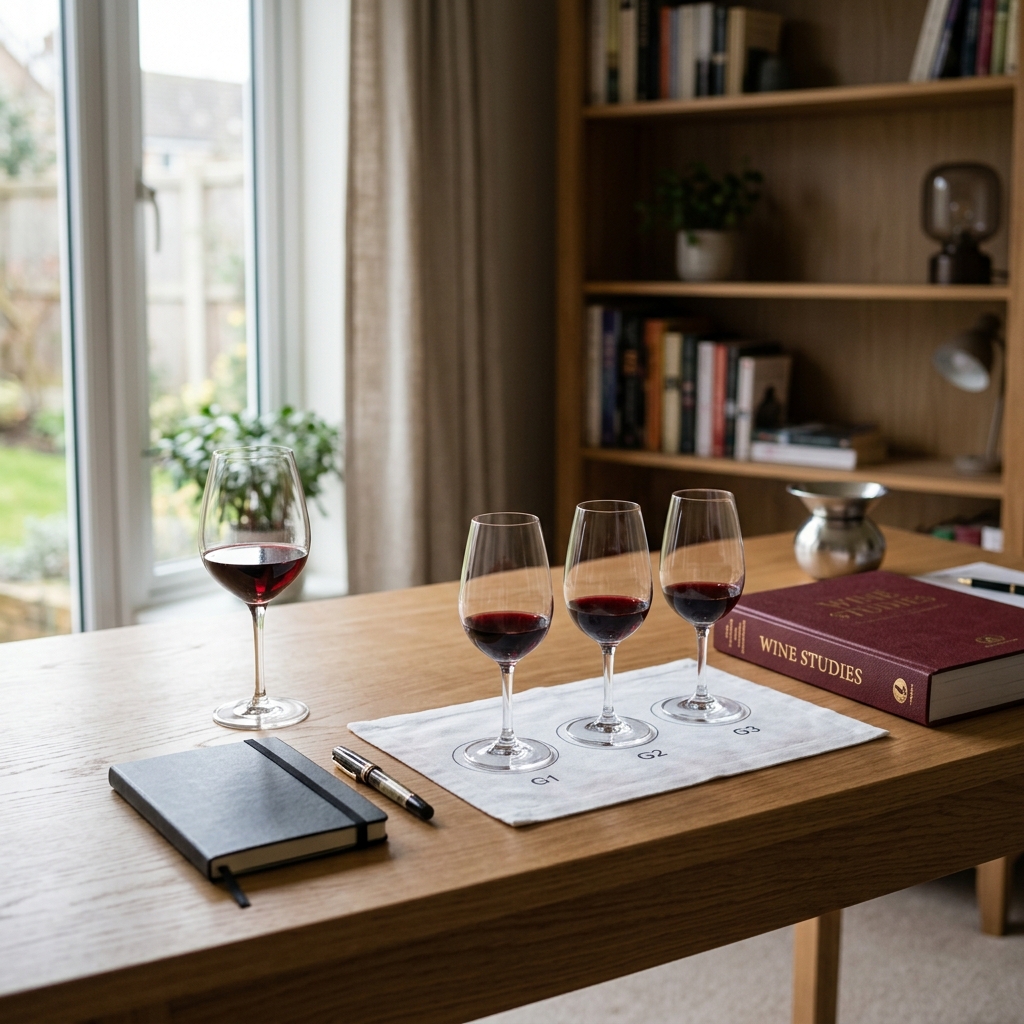
The Infamous Jump in Difficulty
You’ve just received your WSET Level 2 pin. You’re riding high on your success, and you’re already eyeing Level 3.
But here’s what no one tells you: many wine educators and students consider the jump from Level 2 to Level 3 to be the largest increase in difficulty within the WSET pathway.
The shift is dramatic. While many Approved Programme Providers report pass rates above 90% for Level 2, Level 3 pass rates are typically noticeably lower. Students consistently report that they underestimated what “advanced” truly means—not because they didn’t study, but because they didn’t study the right way.
So the real question isn’t just “Should I take WSET Level 3?” It’s “Am I ready for what Level 3 actually demands?”
In this guide, we break down exactly how WSET Level 2 and Level 3 differ, what to expect from the jump in difficulty, and how to decide if Level 3 is the right next step for your wine journey.
The Core Difference: “What” vs. “Why”
The simplest way to understand the difference between the two levels is a shift in mindset: Level 2 teaches you the “What,” while Level 3 demands the “Why.”
- At Level 2: You memorize that Coonawarra produces high-quality Cabernet Sauvignon with distinctive mint/eucalyptus notes.
- At Level 3: You must explain why Coonawarra produces this style by detailing its maritime-influenced climate, its famous Terra Rossa soils, and how specific viticultural and winemaking decisions result in the final wine in the glass.
Level 3 requires you to connect the dots between terroir (climate, weather, soil), viticulture (vineyard management), and vinification (winemaking techniques) to explain a wine’s style, quality, and price.
Time Commitment and Study Hours
The most significant shock for students making the transition is the sheer volume of study required.
| Feature | WSET Level 2 | WSET Level 3 |
|---|---|---|
| ⏱️ Total Study Time | ~28-30 Hours | ~100-150 Hours |
| 📖 Study Materials | Compact study pack | Comprehensive textbook (significantly larger) |
| 🍷 Tasting Practice | Recommended (Not tested) | Mandatory (Strictly tested) |
While it is entirely possible to pass Level 2 with a few weekends of solid cramming, attempting to cram for Level 3 usually ends in failure. You will need to dedicate 5-8 hours a week for 8-12 weeks to absorb the material effectively.
💡 Pro Tip: Most students underestimate how long it takes to memorize 40+ wine regions at Level 3. If you’re working full-time, plan for 12-16 weeks rather than 8. Cramming does not work for this exam.
If you decide to take the plunge, managing your time is critical. Research on spaced repetition consistently shows improved long-term retention compared to passive rereading. Tools like the VinoPrep app optimize how you review flashcards, making every study minute count.
The Exam Format: No Longer Just Multiple Choice
The exam format changes drastically between the two levels, catching many unprepared students off guard.
WSET Level 2 Exam:
- 50 Multiple Choice Questions
- 60 Minutes
- No Tasting Exam
- Difficulty: Straightforward recall. (e.g., “Which grape variety is used to make Sancerre?”)
WSET Level 3 Exam:
- Unit 1 (Theory): 50 Multiple Choice Questions + 4 Short Written Answer Questions (2 hours)
- Unit 2 (Tasting): Blind tasting of 2 wines (30 minutes)
- Difficulty: Applied knowledge and essay writing. (e.g., “Describe the climate of the Northern Rhône and explain how it influences the viticultural practices for Syrah.”)
The Short Written Answer section is where many students fail. You cannot simply dump facts onto the page; you must construct precise, technical answers using the correct WSET terminology. (Read our guide on Common Level 3 Theory Mistakes for more on this).
The Blind Tasting Component
For Level 2, you are taught the WSET Systematic Approach to Tasting (SAT), but you are not tested on it.
For Level 3, the blind tasting exam is mandatory. You will be served one white wine and one red wine blind, and you have 30 minutes to write a complete, calibrated tasting note for both, ending with an assessment of quality and readiness for drinking.
[!WARNING] You do not have to guess the grape or region in the Level 3 tasting exam! You are only graded on your ability to accurately describe the structure (acid, tannin, alcohol) and aromas of the wine using the SAT lexicon.
If the tasting exam sounds intimidating, don’t worry. It is a highly systematic process that can be mastered with deliberate practice. For a deep dive into passing this section, check out our WSET Level 3 Blind Tasting Guide.
The Cost Factor
Beyond study time, there’s the financial commitment to consider:
| Expense | WSET Level 2 | WSET Level 3 |
|---|---|---|
| Course Fee | $400-$800 USD | $1,200-$2,500 USD |
| Wine Tasting Samples | Included | Often $200-$400 extra |
| Study Materials | Textbook included | Textbook + practice wines |
| Retake Fee (if needed) | $150-$300 | $200-$400 per unit |
When you factor in the potential for retake fees, proper preparation becomes an investment, not an expense. This is precisely why structured study tools and mock exams are worth their weight in gold—they’re insurance against the far higher cost of failing and retaking.
Career Impact and ROI
When evaluating whether the jump is worth the higher Level 3 course fees, consider your career goals.
Level 2 is often considered the first professional-level wine qualification. It is perfect if you want to work in wine retail, basic hospitality, or tasting room sales. It shows employers you have a competent, foundational understanding of the wine world.
Level 3 is a professional differentiator. It is widely considered the prerequisite for serious industry roles such as:
- Wine Buyer / Beverage Director
- Advanced Sommelier Roles
- Wine Educator
- Importer / Distributor Sales
If you are an enthusiast rather than an industry professional, Level 3 is still incredibly rewarding. It allows you to build a world-class cellar, understand complex tasting menus, and speak confidently with winemakers and sommeliers anywhere in the world.
Can You Skip Level 2 and Jump Straight to Level 3?
Technically, yes. WSET does not require you to complete Level 2 before enrolling in Level 3.
However, we strongly recommend against it unless:
- You already work in the wine industry with hands-on experience
- You have significant self-study experience with wine (e.g., read wine books, attended tastings regularly for 1+ years)
- You are willing to commit 200+ hours instead of 150 to fill knowledge gaps
- You are already comfortable using the WSET Systematic Approach to Tasting
Most students who skip Level 2 struggle with the foundational terminology and framework that Level 2 provides. The Level 3 textbook assumes you already understand concepts like “lees aging,” “malolactic fermentation,” and “carbonic maceration”—terms that are thoroughly explained in Level 2 but only briefly referenced at Level 3.
Our recommendation: If you have zero formal wine education, take Level 2 first. If you have 2+ years of wine industry experience or have completed equivalent wine courses, you can consider skipping ahead—but expect to spend extra time self-teaching the basics.
Our Verdict: Should You Take the Leap?
Stop at WSET Level 2 if:
- You are a casual enthusiast who just wants to confidently pick bottles at a restaurant or shop.
- You work in hospitality but wine is only a small fraction of your responsibilities.
- You cannot commit to 100+ hours of study over the next few months.
Go for WSET Level 3 if:
- You want a serious career in the wine industry.
- You find yourself constantly asking “Why?” when reading about wine regions and winemaking.
- You want to dramatically improve your blind tasting abilities.
- You eventually want to pursue the prestigious WSET Diploma (Level 4).
Frequently Asked Questions
Q: How long should I wait between Level 2 and Level 3?
A: There’s no mandatory waiting period, but most successful students take 3-6 months to consolidate their Level 2 knowledge and practice blind tasting before enrolling. Use this time to read wine books, attend tastings, and familiarize yourself with the major wine regions covered in Level 3.
Q: Is WSET Level 3 harder than the Court of Master Sommeliers Certified Sommelier Exam?
A: They test different skills. WSET Level 3 is more academic and theoretical, focusing on viticulture, winemaking, and written analysis. The CMS Certified Sommelier emphasizes service, speed, and verbal communication. Many students find the CMS practical exam more stressful, but the WSET theory exam requires deeper technical knowledge. Read our WSET vs CMS comparison for more details.
Q: Can I study for Level 3 while working full-time?
A: Absolutely. Most Level 3 students are working professionals. The key is consistency—dedicate 1-2 hours per day for 12-16 weeks rather than trying to cram on weekends. Tools like VinoPrep allow you to study in short bursts during commutes or lunch breaks.
Q: What if I fail one unit of the Level 3 exam?
A: WSET Level 3 has two units (theory and tasting), and you can retake each unit independently. If you pass one but fail the other, you only need to retake the failed unit. Retake fees range from $200-$400 per unit depending on your course provider.
Bridging the Gap with VinoPrep
The leap from Level 2 to Level 3 is steep, but you don’t have to make it alone. The biggest reason students struggle is that they try to use the same passive reading strategies they used for Level 2. Level 3 requires active recall.
That is exactly why we built VinoPrep.
Whether you are consolidating your Level 2 knowledge or preparing to conquer Level 3, VinoPrep provides:
- Expert Flashcards: Thousands of cards covering every major region, grape, and winemaking technique.
- Mock Exams: Practice under real timed conditions, especially for the tricky multiple-choice sections.
- SAT Practice: Interactive tools to help you calibrate your palate and master the tasting vocabulary.
Ready to level up your wine knowledge?
👉 Download VinoPrep today on iOS and Android to start studying smarter, not harder.
Still deciding? Read our Ultimate WSET Level 3 Exam Guide to see exactly what it takes to pass.
Ready to put this into practice?
VinoPrep's flashcards, interactive maps, and exam simulator are built to help you apply exactly what you've just learned.