White Wine
Riesling Explained: Styles, Regions and Labels for WSET
Riesling explained for WSET: the grape, German Prädikat terms, trocken and GG, Mosel to Pfalz, Alsace, Clare and Eden Valley, and what Levels 2 and 3 expect.
Why Riesling Trips Up So Many WSET Students
You pick up a bottle of German Riesling in class. The label says Spätlese. Is it sweet? Probably. But the next bottle says Spätlese trocken, and it’s bone dry. Then your teacher pours a dry, lime-scented Riesling from Australia and an aged one that smells, oddly, of petrol.
Riesling is one of the few grapes that WSET asks you to know in almost every style, from crisp and dry to intensely sweet. It’s also a favorite in exams because it connects so many topics: climate, ripeness, residual sugar, noble rot, label law and ageing. The good news is that once you understand a few principles, Riesling becomes one of the most logical grapes on the syllabus. This guide explains Riesling for WSET, from the grape itself to the labels you need to decode.
Where Riesling Sits in the WSET Syllabus
Riesling appears at Level 2 as one of the key white grapes, then in much more detail at Level 3. Here’s what the official specifications expect (Level 2 Issue 2.1, 2026, and Level 3 Issue 2, 2022):
| Level | Regions named | Label terms | Tasting samples |
|---|---|---|---|
| Level 2 | Alsace, Mosel, Rheingau, Pfalz, Clare Valley, Eden Valley | Grand Cru (Alsace); Prädikatswein, Kabinett, Spätlese, Auslese, BA, TBA, Eiswein, Trocken, Halbtrocken | A dry Australian Riesling and a German Riesling Spätlese |
| Level 3 | Adds Nahe and Rheinhessen (with key villages), Austria’s Wachau, plus Riesling in the USA, Canada and New Zealand | Adds Qualitätswein, VDP and VDP.Grosses Gewächs (GG), and the Alsace terms Vendanges Tardives and Sélection de Grains Nobles | Essential: a German Riesling with some residual sugar (Kabinett or Spätlese), a VDP dry Riesling and an Eden or Clare Valley Riesling |
Riesling even appears in the sample questions of the Level 2 specification: one asks which grape makes excellent white wines in both Germany and Australia. Level 2 is a 50-question multiple-choice exam in 60 minutes with a 55% pass mark. At Level 3, the theory exam combines 50 multiple-choice questions with four short written answers, and you need 55% in each part, so being able to explain why a Riesling tastes the way it does really pays off.
WSET updates its specifications from time to time, so always check the latest version with your course provider.
The Grape: What Makes Riesling Special
Riesling is the cool-climate white grape par excellence. Four traits explain almost everything about it:
- High acidity. This is Riesling’s signature, and it holds every style together. In dry wines it gives a crisp, mouthwatering structure; in sweet wines it balances the sugar so they don’t feel heavy.
- Aromatic, fruit-led character. Young Riesling shows green apple, lemon and lime, often with floral notes. Riper grapes from warmer sites move towards peach and apricot.
- Rarely oaked. Winemakers want to keep those pure fruit and floral aromas, so Riesling is usually fermented in stainless steel or large, old, neutral vessels. New oak flavors are not part of the style. (Our guide to oak in winemaking explains why vessel size and age matter.)
- Great ageing potential. Thanks to that acidity, good Riesling can age for many years, developing honey, toast and a distinctive petrol (kerosene) note.
Because it reflects its site so clearly, Riesling is the perfect grape for practicing the climate questions WSET loves. If you need a refresher, read our guide to cool vs warm climate wine first.
Where the petrol note comes from
That surprising petrol aroma comes from a compound called TDN. It forms slowly from carotenoid precursors in the grapes and usually becomes more noticeable as the wine ages in bottle. Grapes that get a lot of sun exposure build up more precursors, which helps explain why young Australian Riesling can show the note earlier than many German examples. In tasting, treat a strong petrol note as a likely sign of bottle age rather than youth.
Germany: The Home of Riesling
Germany is the grape’s heartland, and it’s where most of the label vocabulary comes from. Most German Riesling is labeled Qualitätswein, which must come from one of the country’s designated wine regions. The top of that category is Prädikatswein, where the grapes must reach higher ripeness levels.
The Prädikat levels
The six Prädikat terms are ranked by ripeness at harvest, from least to most ripe:
| Prädikat | What it means | Typical style |
|---|---|---|
| Kabinett | The lowest ripeness level for Prädikatswein | Light and delicate, crisp green apple, citrus and floral notes |
| Spätlese | ”Late harvest”: fully ripe grapes picked later than Kabinett | Riper stone fruit, more body, balanced acidity |
| Auslese | Selected bunches of very ripe grapes, sometimes with noble rot | Richer, with dried apricot and honey; often sweet |
| Beerenauslese (BA) | Individually selected overripe berries, usually affected by noble rot | Sweet, rich and rare |
| Eiswein | Grapes picked and pressed while frozen on the vine | Sweet and concentrated, with vivid acidity |
| Trockenbeerenauslese (TBA) | Individually selected shriveled, nobly rotten berries | The sweetest, rarest and most expensive level |
Here’s the key point that catches students out: the Prädikat tells you how ripe the grapes were, not how sweet the wine is. A winemaker can ferment a Kabinett or Spätlese fully dry. That’s why you can find “Spätlese trocken” on a label. Another useful fact: chaptalization (adding sugar to the must) is not allowed for any Prädikatswein. BA, TBA and Eiswein are always sweet, and our guide to how sweet wine is made explains noble rot and frozen grapes in detail.
Dryness terms: trocken, halbtrocken and feinherb
To know how sweet a German Riesling actually is, look for these words:
| Term | Meaning |
|---|---|
| Trocken | Dry. Up to 4 g/L of residual sugar, or up to 9 g/L when the acidity is high enough to balance it |
| Halbtrocken | Off-dry. Up to 12 g/L, or up to 18 g/L with enough acidity |
| Feinherb | Not legally defined, but usually off-dry; some producers use it instead of halbtrocken |
Level 2 lists Trocken and Halbtrocken; feinherb is useful background for reading real labels.
VDP and Grosses Gewächs
The VDP is an association of leading German estates with its own vineyard classification: from estate wines up to the top sites, called Erste Lage and Grosse Lage. A Grosses Gewächs (GG) is a dry wine from a Grosse Lage vineyard, made from hand-picked grapes with limited yields. Think of it as Germany’s answer to a Burgundy Grand Cru, but for dry wine. The Level 3 specification lists VDP and VDP.Grosses Gewächs, and a VDP dry Riesling is one of its essential tasting samples.
The key German regions
| Region | Growing environment | Typical Riesling style |
|---|---|---|
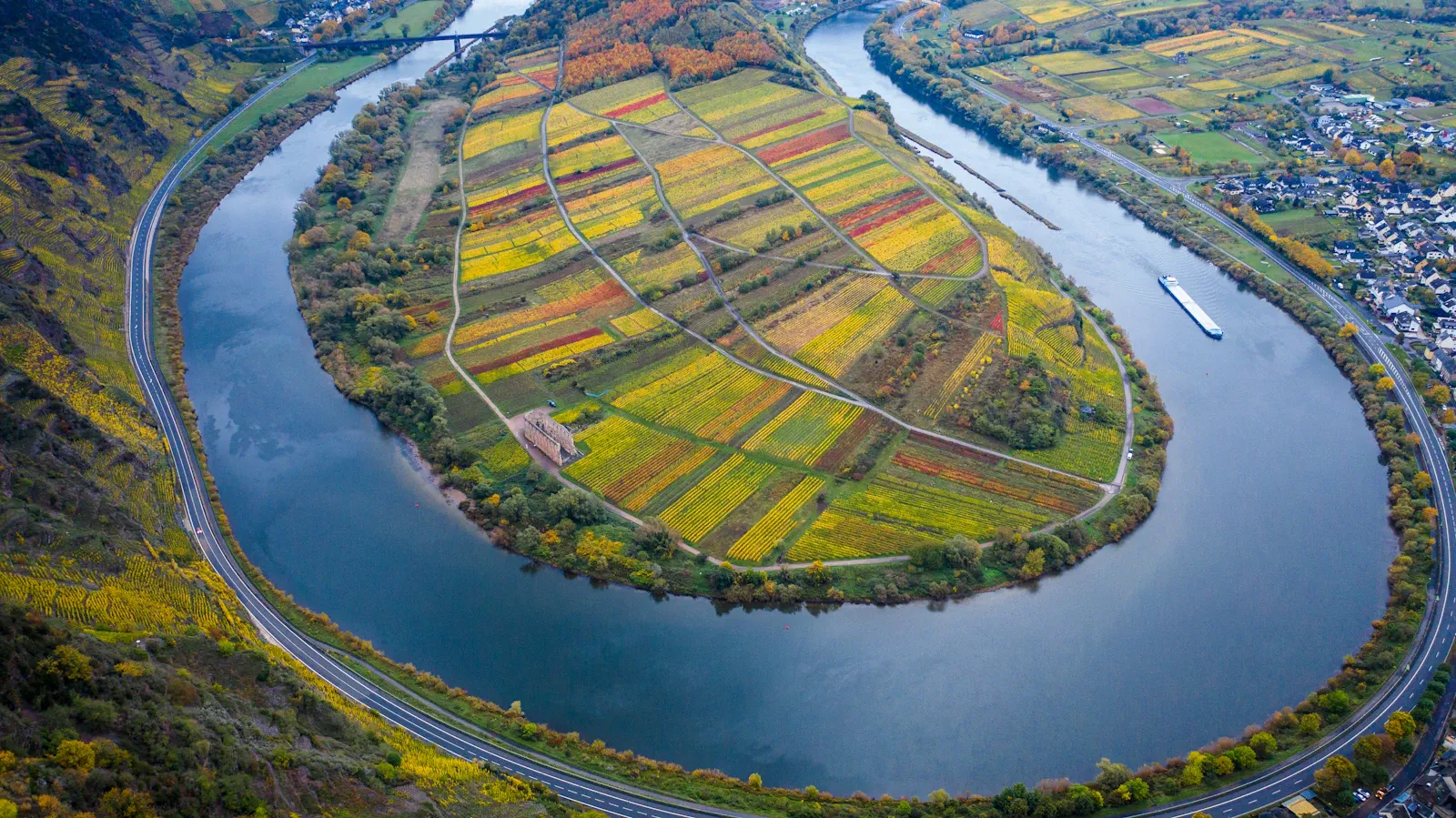
| Mosel | Very steep slate slopes along a winding river; the slate retains heat and helps the grapes ripen | Light-bodied, delicate and high in acidity, with green apple, lime and a “wet slate” character; famous for Kabinett and Spätlese with some sweetness |
| Rheingau | A south-facing strip along the Rhine, sheltered from cold northern winds by the Taunus hills; the highest share of Riesling of any German region | Structured, firm dry wines and celebrated nobly sweet wines |
| Pfalz | Milder and warmer than the Mosel and Rheingau, with varied soils | Riper, fuller-bodied wines, often dry, with stone and even tropical fruit |
| Nahe | A small region with a wide mix of soils (volcanic, slate, sandstone) | Varied styles; at Level 3 you need the village Schlossböckelheim |
| Rheinhessen | A large region and one of Germany’s biggest Riesling areas | Wide range of styles; at Level 3 you need the village Nierstein |
The Level 3 specification also names key villages for the Mosel (Bernkastel, Wehlen, Piesport), Rheingau (Rüdesheim, Johannisberg) and Pfalz (Forst, Deidesheim). Our memory hacks for wine regions can help you lock them in.
💡 Tip: On any German Riesling label, read two things separately. First, the Prädikat (Kabinett, Spätlese…) tells you the ripeness of the grapes. Second, the dryness term (trocken, halbtrocken) tells you the sweetness of the wine. If there’s no dryness term on a Kabinett or Spätlese, expect some residual sugar. Keeping these two ideas apart solves most Riesling label questions.
Alsace: Dry, Rich and Perfumed
Across the Rhine in France, Alsace sits in the rain shadow of the Vosges mountains, which keeps it relatively dry for such a northerly region. Alsace Riesling is mostly dry, and it tends to be fuller-bodied and more textured than a typical Mosel wine, often with a perfumed, floral side.
Alsace has two label terms you need:
- Alsace Grand Cru: wines from the region’s top named vineyards (both Levels 2 and 3).
- Vendanges Tardives and Sélection de Grains Nobles: late-harvest and nobly rotten sweet styles (Level 3).
At Level 3, Alsace is studied with its other key grapes: Gewurztraminer, Pinot Gris and Muscat, and one of these or Riesling is an essential tasting sample.
Austria: Lean, Dry and Mineral
At Level 3, Riesling is one of Austria’s principal grapes, and the Wachau is the region to remember. Its steep terraces, thin rocky soils and cool temperatures give dry, lean, intensely mineral Rieslings. Nearby Kremstal and Kamptal also make fine dry Riesling. If you see “Austria” and “Riesling” in a question, think dry first.
Australia: Clare Valley and Eden Valley
Australia may be a warm country, but its two classic Riesling regions in South Australia stay relatively cool. Clare Valley vineyards sit at roughly 400 to 500 meters, with cool nights that preserve acidity. Eden Valley is known for some very old vines and for floral, lime-driven wines.
Both make a very recognizable style: dry, high in acidity, with intense lime and lemon fruit when young. With bottle age, the wines develop toast and honey and, often, that petrol note. Many producers bottle under screwcap: a group of Clare Valley producers moved to it with the 2000 vintage, and the closure is now widespread across Australia. A dry Australian Riesling is one of the Level 2 tasting samples, and an Eden or Clare Valley Riesling is essential at Level 3.
Riesling Elsewhere in the World
At Level 3, Riesling also appears among the grapes of the USA, Canada and New Zealand. Washington State, New York’s Finger Lakes and Ontario all have well-known Riesling vineyards, New Zealand makes both dry and sweeter styles, and Canada is famous for its Icewine, made from frozen grapes. Icewine is an optional Level 3 tasting sample, and Vidal and Riesling are both named among Canada’s grapes.
Quick Comparison: Riesling Around the World
| Style | Sweetness | Body | Key aromas |
|---|---|---|---|
| Mosel Kabinett | Often off-dry or medium | Light | Green apple, citrus, floral |
| German GG or Pfalz trocken | Dry | Medium to full | Ripe stone fruit, citrus |
| Alsace Riesling | Usually dry | Medium to full | Citrus, stone fruit, floral |
| Wachau Riesling | Dry | Medium | Citrus, stone fruit, mineral |
| Clare or Eden Valley | Dry | Light to medium | Lime, lemon; toast and petrol with age |
| Auslese, BA, TBA, Eiswein | Sweet to very sweet | Medium to full | Apricot, honey, dried fruit |
How to Use This in the Exam
In the multiple-choice paper, expect label and matching questions: which Prädikat level is lowest, which term means dry, which grape is shared by Germany and Australia, which Australian regions are famous for Riesling.
In the written paper, link the environment to the style. A strong Level 3 answer explains the chain: “Steep, south-facing slate slopes in the Mosel help the grapes reach ripeness in a cool climate. The cool climate keeps acidity high, giving light, delicate wines with green fruit, often balanced by some residual sugar.”
In tasting, Riesling is a great wine for practicing precise descriptions. Pay close attention to sweetness, acidity and alcohol, and use our guide to assessing wine quality with BLIC to justify your conclusion.
🍷 Want Riesling labels to stick before exam day?
The VinoPrep app helps you master grapes, regions and label terms with WSET-style mock exams, flashcards and interactive wine maps, and shows you which topics still need work.
Download VinoPrep on iOS | Download VinoPrep on Android
Key Takeaways
- Riesling is an aromatic, high-acid, rarely oaked grape that thrives in cool climates and ages well, gaining honey, toast and petrol notes.
- The German Prädikat levels (Kabinett, Spätlese, Auslese, BA, Eiswein, TBA) measure ripeness at harvest; trocken and halbtrocken tell you the sweetness.
- Mosel gives light, delicate wines from steep slate slopes; Rheingau is structured; Pfalz is riper and fuller.
- Alsace and Austria’s Wachau focus on dry Riesling, and Clare and Eden Valley in Australia make dry, lime-scented wines.
- A Grosses Gewächs (GG) is a dry wine from a top VDP vineyard, listed in the Level 3 specification.
Frequently Asked Questions
Is Riesling sweet or dry?
Both. Riesling is made in every style from bone dry to lusciously sweet. Alsace, Austria and Australia’s Clare and Eden Valleys are known mainly for dry Riesling, while Germany makes the whole range. On a German label, trocken means dry and halbtrocken means off-dry, while the Prädikat terms describe how ripe the grapes were at harvest, not how sweet the finished wine is.
What are the German Prädikat levels in order?
From least to most ripe at harvest: Kabinett, Spätlese, Auslese, Beerenauslese (BA), Eiswein and Trockenbeerenauslese (TBA). Kabinett is the lightest and most delicate. Beerenauslese and Trockenbeerenauslese are sweet wines usually made from grapes affected by noble rot, and Eiswein is made from grapes picked and pressed while frozen.
Why does Riesling smell of petrol?
The petrol or kerosene note comes from a compound called TDN, which forms slowly from carotenoid precursors in the grapes. It usually grows stronger as Riesling ages in bottle. Grapes exposed to a lot of sun build up more precursors, which is one reason young Australian Rieslings can show the note earlier than many German ones.
What is a German Grosses Gewächs?
Grosses Gewächs, often shortened to GG, is a designation used by the VDP, an association of leading German estates. It marks a dry wine from one of the association’s top-classified vineyards, with hand-picked grapes and limited yields. The WSET Level 3 specification lists VDP and VDP.Grosses Gewächs, and a VDP dry Riesling is one of its essential tasting samples.
Which Riesling regions do I need for WSET Level 2?
The Level 2 specification (Issue 2.1, 2026) lists Alsace in France, Mosel, Rheingau and Pfalz in Germany, and Clare Valley and Eden Valley in Australia. It also lists the labelling terms Grand Cru for Alsace and Prädikatswein, Kabinett, Spätlese, Auslese, Beerenauslese, Trockenbeerenauslese, Eiswein, Trocken and Halbtrocken for Germany.
Put it into practice
Drill every grape and region from this guide.
VinoPrep's flashcards, interactive maps, and exam simulator are built to help you apply exactly what you've just learned.