Journal / WSET Level 2
Exam Preparation · WSET Level 2
WSET Level 2 Practice Questions: 20 Sample Questions With Answers
Test yourself with 20 WSET Level 2 practice questions covering every part of the syllabus, with clear answers, explanations, and a scoring guide.

Ready to Find Out What You Actually Know?
You’ve read the study guide, highlighted half the book, and you can probably name a few grapes from Bordeaux. But here’s the question that really matters: could you pass the WSET Level 2 exam if you sat it tomorrow?
Reading feels productive, but it’s a poor way to measure progress. The fastest way to find your gaps is to test yourself with questions that look like the real thing. That’s exactly what this page is for.
Below you’ll find 20 WSET Level 2 practice questions covering every area of the syllabus, roughly in the same proportions as the real exam. Answers and short explanations come after each section, so you can test yourself first and check afterwards.
Grab a pen, set a timer for 24 minutes (the same pace as the real exam), and let’s go.
How the Real WSET Level 2 Exam Works
Before you start, it helps to know exactly what you’re practicing for. According to the official WSET Level 2 specification, the exam looks like this:
| Feature | Details |
|---|---|
| 📋 Format | 50 multiple-choice questions |
| ⏱️ Time | 60 minutes |
| 📕 Book policy | Closed book |
| ✅ Pass mark | 55% (28 out of 50) |
| 🏅 Merit | 70% or more |
| 🏆 Distinction | 85% or more |
| ❌ Wrong answers | No penalty, so never leave a blank |
The questions aren’t spread evenly. Grape varieties make up well over half the exam, which is why our practice set leans the same way:
| Syllabus Area | Approx. Questions in the Real Exam |
|---|---|
| Vineyard environment and grape growing | 5 |
| Winemaking and bottle ageing | 4 |
| Principal grape varieties | 19 |
| Regionally important grape varieties | 12 |
| Sparkling and fortified wines | 6 |
| Storage, service and food pairing | 4 |
Specifications are updated from time to time, so always check the latest version with your course provider.
For a full breakdown of the course itself, see our Complete WSET Level 2 Study Guide.
Section 1: In the Vineyard
Question 1. Compared with a warm climate, a cool climate typically produces wines with:
- A) Higher alcohol and lower acidity
- B) Higher acidity and a lighter body
- C) Riper black fruit flavors and a fuller body
- D) Lower acidity and more tannin
Question 2. Why are most European vines grafted onto American rootstocks?
- A) To increase the size of the harvest
- B) To protect the vines against phylloxera
- C) To help the grapes ripen earlier
- D) To prevent frost damage in spring
Section 1 Answers
1: B. In a cool climate, grapes ripen slowly and keep more of their natural acidity, while building less sugar. Less sugar means less alcohol, which gives a lighter body. Warm climates push the other way: riper fruit, more alcohol, fuller body and lower acidity.
2: B. Phylloxera is a tiny insect that attacks vine roots. The European vine species is vulnerable to it, but certain American species are resistant, so growers graft European varieties onto American rootstocks to protect them.
Section 2: In the Winery
Question 3. During alcoholic fermentation, yeast converts sugar into:
- A) Alcohol and tannin
- B) Acid and carbon dioxide
- C) Alcohol and carbon dioxide
- D) Alcohol and oxygen
Question 4. What does malolactic conversion do to a wine?
- A) It makes the wine sweeter
- B) It converts sharp malic acid into softer lactic acid
- C) It adds tannin from the grape skins
- D) It raises the alcohol level
Section 2 Answers
3: C. This is one of the most important equations in the course: sugar + yeast = alcohol + carbon dioxide. In still wines, the carbon dioxide escapes. In sparkling wines, winemakers trap it to create the bubbles.
4: B. Malolactic conversion softens acidity by turning tart, green-apple-like malic acid into gentler lactic acid. It can also add buttery flavors, which is why it’s commonly used for some styles of Chardonnay but usually avoided for crisp, aromatic whites.
Section 3: The Principal Grape Varieties
This is the biggest part of the exam, so take your time here.
Question 5. Which grape variety is used to make Chablis?
- A) Sauvignon Blanc
- B) Riesling
- C) Chenin Blanc
- D) Chardonnay
Question 6. Sancerre and Pouilly-Fumé are made from:
- A) Sauvignon Blanc
- B) Chardonnay
- C) Sémillon
- D) Pinot Gris
Question 7. Which grape variety dominates the blends of Saint-Émilion and Pomerol?
- A) Cabernet Sauvignon
- B) Merlot
- C) Syrah
- D) Malbec
Question 8. Hermitage and Côte Rôtie in the Northern Rhône are mainly known for wines made from:
- A) Grenache
- B) Pinot Noir
- C) Syrah
- D) Gamay
Question 9. Central Otago in New Zealand is particularly known for which black grape?
- A) Pinot Noir
- B) Cabernet Sauvignon
- C) Merlot
- D) Shiraz
Question 10. Which statement about Riesling is correct?
- A) It is usually matured in new oak to add vanilla flavors
- B) It has high acidity and is made in styles from dry to sweet
- C) It can only be made as a dry wine
- D) It is the main grape of Sancerre
Question 11. Coonawarra in Australia is especially famous for which variety?
- A) Pinot Noir
- B) Riesling
- C) Cabernet Sauvignon
- D) Sauvignon Blanc
Section 3 Answers
5: D. Chablis is the most northerly district of Burgundy, and like the rest of Burgundy’s great whites, it’s made from Chardonnay. Its cool climate gives a lean, high-acid style with green fruit and citrus notes.
6: A. Both sit in the Loire Valley and both are classic examples of Sauvignon Blanc: high acidity, with green fruit and herbaceous aromas.
7: B. These are Bordeaux’s famous Right Bank appellations, where Merlot leads the blend. On the Left Bank (the Médoc, including Pauillac and Margaux), Cabernet Sauvignon takes the lead. Mixing up the two banks is a classic Level 2 trap.
8: C. The Northern Rhône is the home of Syrah. Grenache is far more important in the Southern Rhône, which is a classic trap in multiple-choice questions.
9: A. Central Otago is one of New Zealand’s top regions for Pinot Noir, along with Martinborough and Marlborough.
10: B. Riesling is an aromatic grape with naturally high acidity, and it’s rarely given new oak because winemakers want to preserve its fruit and floral aromas. It’s made in a wide range of styles: Alsace and the Clare Valley are known for dry Riesling, while Germany makes everything from dry to lusciously sweet.
11: C. Coonawarra is famous for Cabernet Sauvignon, often with a distinctive mint or eucalyptus note.
💡 Struggling with this section? That’s normal. Grape-region pairs are the single biggest memory challenge in Level 2. Our guide to memory hacks for wine regions shows you how to lock them in with active recall and spaced repetition.
Section 4: Regionally Important Grape Varieties
Question 12. Barolo and Barbaresco are made from:
- A) Sangiovese
- B) Barbera
- C) Corvina
- D) Nebbiolo
Question 13. What is the main black grape variety of Rioja?
- A) Tempranillo
- B) Malbec
- C) Carmenère
- D) Pinotage
Question 14. Vouvray in the Loire Valley is made from:
- A) Viognier
- B) Chenin Blanc
- C) Sémillon
- D) Albariño
Question 15. Malbec is most closely associated with which country?
- A) Chile
- B) South Africa
- C) Argentina
- D) Australia
Question 16. Which grape variety is the main variety used for Tokaji in Hungary?
- A) Fiano
- B) Cortese
- C) Garganega
- D) Furmint
Section 4 Answers
12: D. Both of these Piedmont wines are made from Nebbiolo, a pale-looking grape with surprisingly high tannin and high acidity. Don’t let the name Barbera trick you: it’s also from Piedmont, but it doesn’t make Barolo.
13: A. Tempranillo is the star of Rioja, often blended with Garnacha. It’s also the key grape of Ribera del Duero.
14: B. Vouvray is made from Chenin Blanc, and it’s produced in every style from dry to sweet, including sparkling.
15: C. Malbec originally comes from France, but Argentina, and especially Mendoza, made it famous. It’s now the country’s signature grape.
16: D. Furmint is the main grape of Tokaji, Hungary’s famous wine region, used for both dry and sweet wines. Fiano, Cortese and Garganega are all Italian white grapes, used for wines like Fiano di Avellino, Gavi and Soave.
Section 5: Sparkling and Fortified Wines
Question 17. In the traditional method used for Champagne, where does the second fermentation take place?
- A) In a large pressurized tank
- B) In oak barrels
- C) In the bottle
- D) There is no second fermentation
Question 18. Prosecco is usually made using which method?
- A) The tank method
- B) The traditional method
- C) Carbonation
- D) The solera system
Question 19. Why is most Port sweet?
- A) Sugar is added after fermentation
- B) Grape spirit is added during fermentation, which stops the yeast and leaves natural sugar in the wine
- C) The grapes are dried before pressing
- D) It is blended with sweet sherry
Section 5 Answers
17: C. In the traditional method, the second fermentation happens in the bottle the wine is sold in. The wine then rests on its dead yeast cells, which adds the bready, toasty flavors that Champagne is known for.
18: A. Prosecco uses the tank method, where the second fermentation happens in a sealed tank. This keeps the fresh, fruity aromas of the Glera grape front and center.
19: B. For Port, grape spirit is added partway through fermentation. The higher alcohol kills the yeast, so the remaining natural grape sugar stays in the wine. That’s what makes Port both sweet and strong.
Section 6: Food and Wine Pairing
Question 20. What effect does sweetness in food have on a dry wine?
- A) It makes the wine taste sweeter and fuller
- B) It makes the wine taste more bitter and acidic, and less fruity
- C) It has no noticeable effect
- D) It makes the wine taste less acidic
Section 6 Answers
20: B. Sweetness in food makes a wine seem drier, more acidic and more bitter, and less fruity. That’s why a sweet dessert usually calls for a wine that’s at least as sweet as the dish.
How Did You Score?
Count your correct answers and compare them to the real exam’s grading:
| Your Score | What It Means |
|---|---|
| 17 to 20 | Distinction territory (85%+). You’re in great shape. |
| 14 to 16 | Merit level (70%+). Solid, keep polishing. |
| 11 to 13 | Pass level (55%+). You’d likely pass, but with little margin. |
| 0 to 10 | Not there yet. Focus on the sections where you dropped marks. |
Twenty questions is only a snapshot, though. The real exam has 50, and a few unlucky questions can swing your result more than you’d expect. Look at which sections cost you marks, not just the total: that’s where your next study session should go.
5 Tips for Answering Multiple-Choice Questions
- Read every option before choosing. Many questions include two plausible answers. The first one that looks right isn’t always the best one.
- Eliminate first. If you can rule out two options, you’ve turned a guess into a 50/50.
- Never leave a blank. There’s no penalty for wrong answers, so an educated guess always beats an empty box.
- Watch for small words. Words like “main,” “most likely” or “NOT” completely change the question.
- Flag and move on. At about 72 seconds per question, getting stuck costs you more than skipping. Come back to tricky ones at the end.
For more ways to study smarter, see our best WSET Level 2 study tips.
🍷 Want 50-question mocks that feel like the real thing?
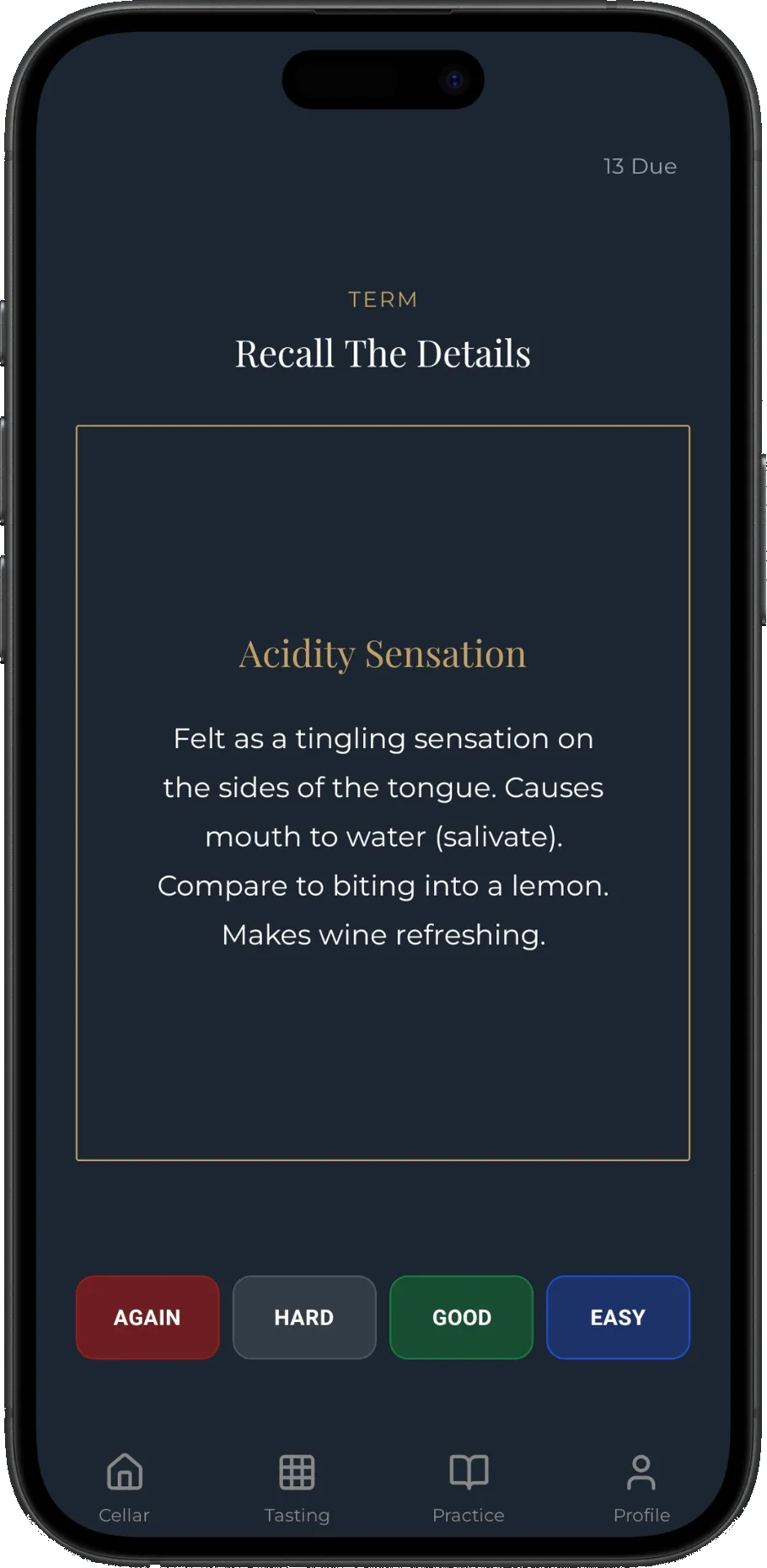
The VinoPrep app gives you full WSET Level 2 mock exams, flashcards for every grape and region, and progress tracking that shows exactly which topics need work.
Download VinoPrep on iOS | Download VinoPrep on Android
Key Takeaways
- The WSET Level 2 exam has 50 multiple-choice questions in 60 minutes, and you need 55% to pass.
- Grape varieties make up over half the exam, so grape-region pairs deserve most of your study time.
- Classic traps include Left Bank vs Right Bank Bordeaux, Northern vs Southern Rhône, and grapes from the same region (like Nebbiolo and Barbera).
- There’s no penalty for wrong answers, so always answer every question.
- Practice questions are the fastest way to find your weak spots. Aim for 70% or more in timed mocks before exam day.
Feeling confident with Level 2? When you’re ready to look ahead, our comparison of WSET Level 2 vs Level 3 explains what comes next.
Frequently Asked Questions
How many questions are in the WSET Level 2 exam?
The WSET Level 2 Award in Wines exam has 50 multiple-choice questions, and you have 60 minutes to answer them. It is a closed-book exam.
What is the pass mark for WSET Level 2?
You need 55% to pass, which means at least 28 correct answers out of 50. A score of 70% or more earns a Pass with Merit, and 85% or more earns a Pass with Distinction.
Are there official WSET Level 2 past papers?
No. Real WSET exam papers are confidential: candidates hand them back at the end of the exam and aren’t allowed to share their content. The best alternatives are the sample questions provided by your course provider, the self-assessment questions in your study materials, and practice tests written to match the official specification.
Do wrong answers lose marks in the WSET Level 2 exam?
No. Each correct answer is worth one mark and wrong answers are not penalized, so you should never leave a question blank.
How many practice questions should I do before the WSET Level 2 exam?
Aim to complete at least two or three full 50-question mock exams under timed conditions, plus regular short quizzes on your weakest topics. Consistently scoring 70% or more in practice is a good sign you are ready.
Put it into practice
Drill every grape and region from this guide.
VinoPrep's flashcards, interactive maps, and exam simulator are built to help you apply exactly what you've just learned.